A method by Antonio Moll

Beyond facial exercise.

The face’s new foundations.

WHAT IS ATLAS FACE SCULPT? Atlas Face Sculpt is a technique created by Antonio Moll to work on the deep architecture that supports the face. Force engineering applied by hand: vectors, levers and loads directed at precisely the right angle and point. Twenty minutes a day, without grimacing or repetitions.

Discover ATLAS

Starts November 20
Online course · From €98
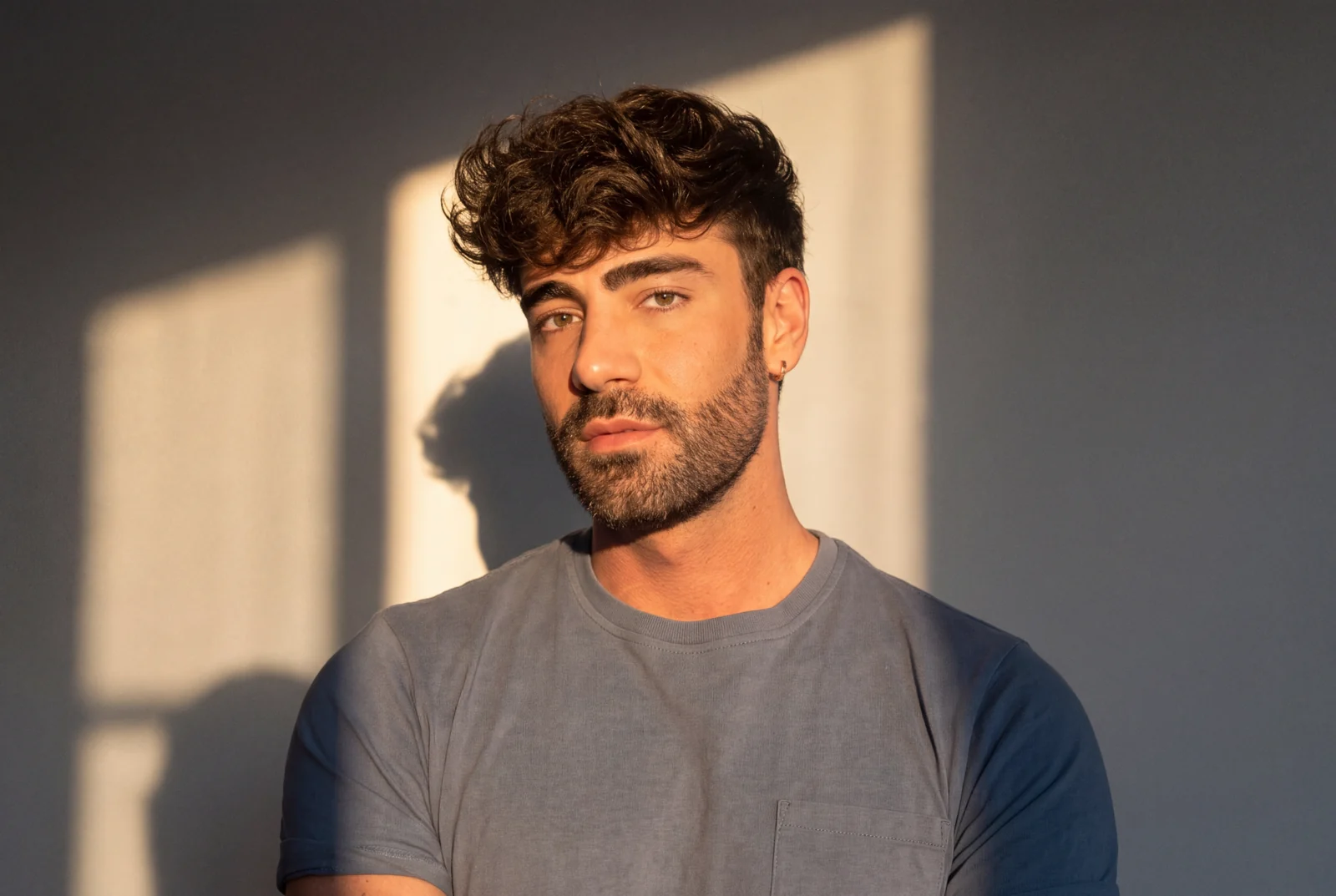
Antonio Moll, creator of ATLAS Face Sculpt
Antonio MollATLAS / Face Sculpt
20 minutesof daily practice
100% onlineat your own pace, through the app
One year of accessfrom the start date
No experience neededthe course starts from the basics

01 · WHAT MAKES ATLAS DIFFERENT

The face stays still. The force moves.

Atlas breaks with the logic behind everything we know as face yoga and facial exercise. There is no grimacing, no repetitions, no cycle of contraction and relaxation: tension is held in a fixed position and directed precisely towards strategic anchor points. The aim is no longer to make the muscle work harder, but to carry the load to the structures that support the face. An engaged muscle improves facial tone. Firm support changes the face’s position.

Read more

What those techniques achieve is real and deserves to be acknowledged accurately. Repeated contraction counters atrophy, restores muscle volume and brings back tone. Manual work promotes circulation and drainage, improving the texture and appearance of the skin. A face trained in this way improves noticeably, and that achievement is not in question.

Support, however, does not depend on muscle volume. It depends on the muscle’s attachment points to bone and on the ligaments that pass through the layers of tissue to reach the superficial planes. This is connective tissue: it does not contract at will, and it responds not to repeated movement but to mechanical stimuli of a different kind.

That is why results always reached a limit. A more developed muscle is like a thicker cable; but when the cable’s anchor has lost firmness, increasing its thickness strengthens the system without addressing the point where descent begins. The work was being applied, effectively, to everything around the foundation. Atlas turns its attention to the foundation itself.

This explains a common situation: faces trained for years, with firm muscles and healthy-looking skin, that continue to show changes associated with descending tissue. It is not a question of consistency, but of which tissue has received the stimulus.

The anchors that support the face

02 · WHERE ATLAS WORKS

A face rests on pillars.

Atlas creates precise positions and resistance that concentrate the load on key points within the face’s deep architecture. These are supporting structures that familiar techniques do not specifically address, yet they influence how tissues hold their position against gravity. And a pillar does not respond to massage or stretching: it takes a load.

Read more

In a building, the elements that keep it standing are not the visible ones. Its cladding can be completely renewed and its rooms refurnished without either changing how the structure behaves. To affect its stability, you have to work on what supports it.

And a pillar does not respond to massage or stretching. It takes a load: firm, sustained tension aligned with its own axis. That is the stimulus a supporting structure recognises, and that is where Atlas begins its work.

This is where the name comes from. Atlas is the one who holds things up, and in a face that support lies in the least visible structures: the anchor points and tissues that organise and maintain facial architecture.

03 · WHAT CHANGES IN THE MIRROR

What changes is not the smile. It’s the face at rest.

A higher cheekbone, a less pronounced fold beside the nose, a better-positioned corner of the mouth, a more defined facial contour. But Atlas’s real objective goes beyond any expression: it is the face when you are not deliberately holding it in place. The face at the end of the day, the one you wear when no one is looking.
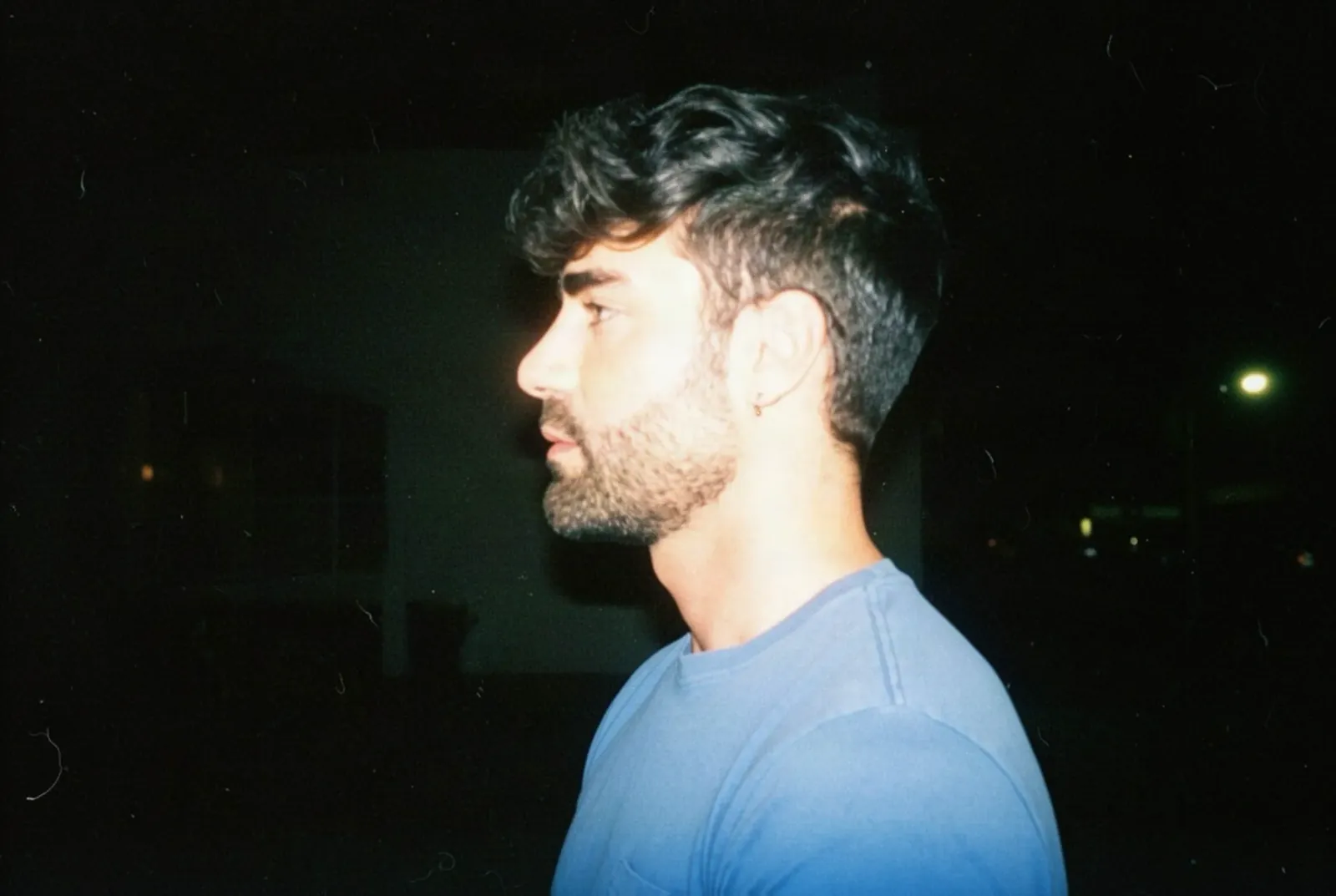
Antonio Moll in profile. The markers indicate the cheekbone, the fold beside the nose, the corner of the mouth and the jawline.
Antonio MollFacial reference points
  1. Cheekbone

    Height and projection.

  2. Nasolabial fold

    From the side of the nose to the corner of the mouth.

  3. Mouth corner

    Its position at rest.

  4. Facial contour

    Definition along the jawline.

Results may vary according to each person’s individual characteristics.

Read more

The cheekbone may regain height and projection when the structures that help support the tissues of the midface function better.

The fold that runs from the nose to the corner of the mouth is not simply a surface change. Its depth is related, among other factors, to the position and distribution of tissue in the midface. When that structural relationship changes, the appearance of the fold may also change.

The position of the corner of the mouth at rest can change. It is one of the features that most often contributes to a face looking tired, severe or older.

The facial contour may regain definition, and the jawline may become more distinct from the neck, when the arrangement of the tissues resting in that area improves.

Above all of these is one of Atlas’s central aims: to work on the face at rest. Not just the expression rehearsed in a mirror, but the face at the end of the afternoon, in an unexpected photograph, the one present for most of the day.

04 · HOW IT WORKS

When movement stops, force finds a new destination.

If the muscle moves, force is dissipated in the movement itself. If it remains still and under tension, that same force is transmitted to the structures that support the face. The face stops moving and starts supporting itself.

Read more

When a muscle contracts and the tissue moves, the force generated is used to produce that movement. When movement is blocked and the contraction is maintained, that tension is transmitted to the attachment points and the structures receiving the load.

This is a matter of physics before aesthetics, and it explains why repeating a movement is not the same as loading a supporting structure. Connective tissue cannot contract, but it responds to mechanical stimuli: the magnitude of the load, its direction and how long it is maintained determine that response.

Static loading alone is not enough either. Without a precise direction, the stimulus disperses. The angle of application, the point of support and the time for which the load is held form Atlas’s logic, setting it apart from facial exercise based on movement.

The aim is not simply volume or expressiveness. It is support: working on the elements involved in the face’s ability to maintain its position.

01

Angle

The direction in which tension is applied.

02

Anchor point

The precise point of support.

03

Time

How long the tension is held.

05 / HOW ATLAS BEGAN

Twenty-two years that had to be left behind.
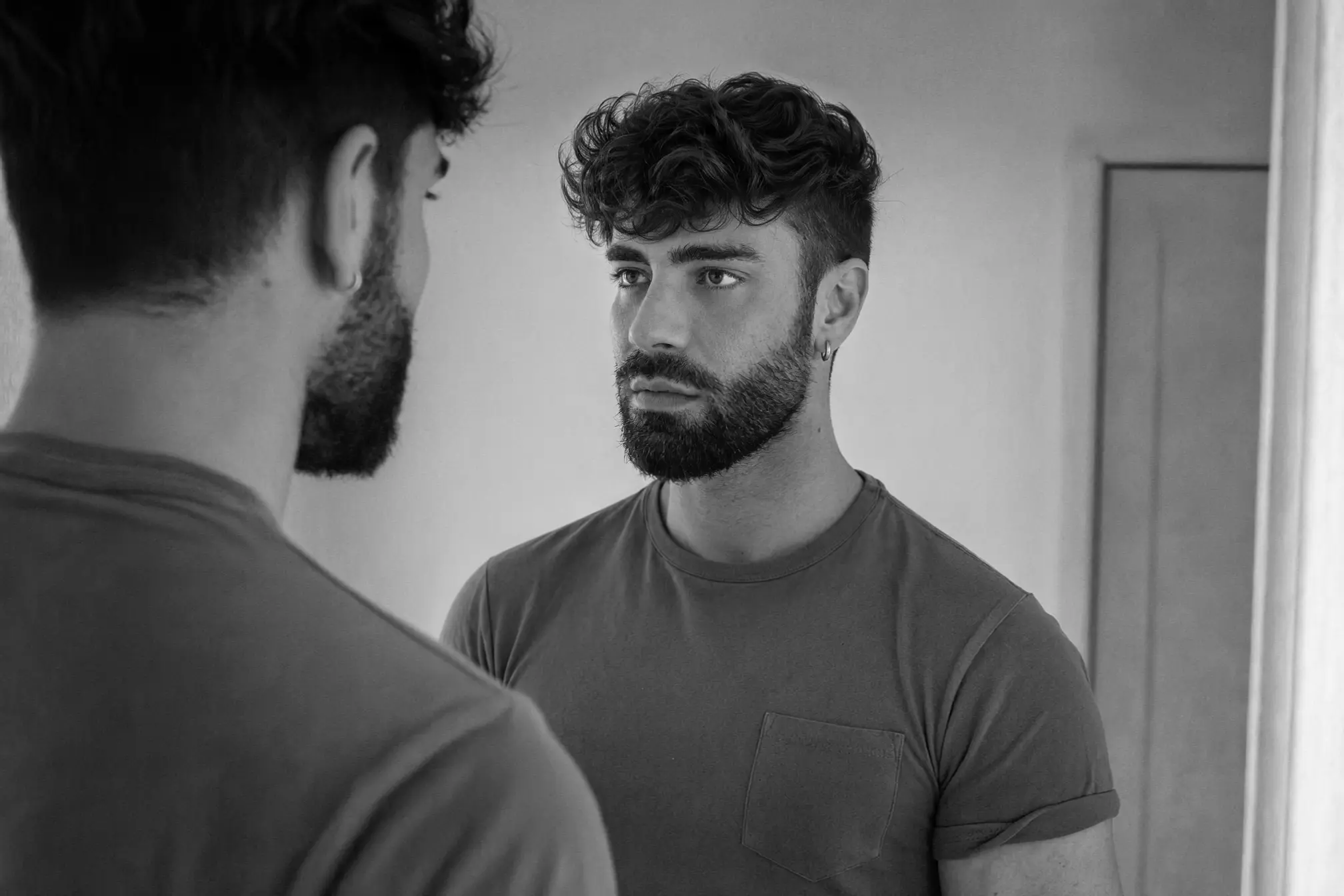
Antonio Moll in front of a mirror, in black and white
Antonio Moll · Creator of NeoRejuvenation

Atlas was not created to improve what came before. It began when what came before was no longer enough.

After more than twenty years with his hands on his own face, Antonio Moll knows well the point where everything stops. Face yoga and facial exercise do produce results, but something in the descent of the structure does not yield, however carefully the technique is refined. It is there, at that limit, that he stops refining what he has learned and begins to ask what truly supports a face, and what lies beyond what is already known.

Read the full story

Antonio Moll is the creator of NeoRejuvenation. His career has always been built on the same foundation: questioning established ideas and seeking the origins and deeper causes that explain a particular result. With Atlas, he has applied that same principle to his own method. Rather than simply developing new exercises, he has returned to the source: the anatomy of the face and the forces acting on its structures.

Over recent months, he has studied the face layer by layer, from muscles and fascia to ligaments, attachment sites and anchor points. But anatomy alone was not enough. He also analysed the physics of a structure constantly subjected to gravity: the levers created, the direction of vectors, the distribution of loads and the points where tension ultimately falls.

He brought the biology of each tissue into that analysis. A muscle, a fascia, a ligament and a bony structure do not share the same function or respond to the same kind of stimulus. That distinction was fundamental in determining what kind of work might make sense for each one.

The question was no longer which exercise to perform. His research turned towards something more essential: what truly supports the face, the direction in which each structure works, how forces pass between them, where the load is concentrated and which stimulus each tissue recognises.

Atlas emerged from that research: an approach that stops looking at the face solely through muscular movement and instead addresses it as a structure involving tissues, anchors, vectors and loads. It is not simply about adding new exercises, but about changing the starting point for understanding and working on facial ageing.

06 / THE PRACTICE

Twenty minutes a day.

No devices, no cosmetics, no external intervention and no products to buy.

View enrolment

07 / PRICING AND START DATE

Starts
November 20.

Founding group · Enrolment open

Tier 01Enrolment open
98€

150 places · Founding group

Reserve my place
Tier 02Next tier
120€

150 places · Founding group

Available once the previous tier is full

Tier 03Next tier
160€

150 places · Founding group

Available once the previous tier is full

450 places in total. Prices rise as places fill, not on a set date.

Online courseAccess to the appOne year of access from the start dateNo prior knowledge needed

Read the refund policy before enrolling.

Have a question? support@neorejuvenation.com

08 / FREQUENTLY ASKED QUESTIONS

Before you begin.

What will I receive when I enrol?

You will have one year of access to the Atlas Face Sculpt app, with the method explained step by step by Antonio Moll and all the exercises organised so you can learn, review and practise them whenever you like, on any internet-connected device, at your own pace.

Is it for men or women?

Both. Facial structure and the mechanisms involved in its descent are the same in men and women, and the method works on them in the same way. The Atlas routine is the same for both.

How does it differ from Antonio Moll’s other courses?

Atlas Face Sculpt is neither an update nor an evolution of anything Antonio Moll has taught before. Nor is it based on the principles that have underpinned face yoga and facial exercise until now. It is a new method with its own logic. It does not extend an earlier method: it introduces a different way of understanding and working on the face.

Do I need to have taken the earlier courses?

No prior knowledge is required. Atlas starts from the basics, and every movement is explained in detail from day one. Anyone who has practised facial exercise before may recognise certain sensations sooner and adapt to the routine more easily, but that is not a requirement for starting.

Is it online? How do I follow the course?

Yes, the course is entirely online and can be followed from wherever you choose, at your own pace. You will receive access to the app, where you can follow the course and practise the exercises on any internet-connected device.

How much does it cost?

The price reflects when you decide to join and rewards those who plan ahead and commit early. The first 150 places cost €98, the next 150 cost €120 and the final 150 cost €160. In US dollars, the three tiers are $120, $150 and $190 respectively. Prices rise as places fill, not on a set date: deciding earlier means joining on the best terms.

How long do I have to enrol?

The founding group is limited to 450 places. Enrolment closes as soon as they are all filled.

How long will I have access?

Your access licence remains active for one year from the start date.

Are refunds available?

As this is a first, founding edition with reserved places, refunds are not available. Any questions before enrolment can be submitted in writing and will be answered before you decide, bearing in mind that there are only 450 places and availability depends on how quickly they fill.

ATLAS / Face Sculpt

The new foundations of facial exercise.

I want to be part of it

A method by Antonio Moll · Starts November 20